
Search Ohio Criminal History
Ohio criminal history records are kept by courts, law enforcement, and state agencies across all 88 counties. You can search for criminal cases online or in person at the Clerk of Courts in the county where a case was filed. The Ohio Bureau of Criminal Investigation runs the state's main criminal history database and handles fingerprint background checks through its WebCheck system. Court records, offender data, and sex offender registration info are all open to the public in most cases. This guide shows you where to look, what you can find, and how to get copies of Ohio criminal history records from any county in the state.
Ohio Criminal History Overview
Ohio Criminal History Through BCI
The Bureau of Criminal Investigation is the central keeper of criminal history records in Ohio. BCI falls under the Ohio Attorney General's office. It runs the state's Automated Fingerprint Identification System, which holds millions of fingerprint records. The database has arrest data, charges, convictions, and case outcomes sent in by courts and law enforcement from all 88 counties. BCI processes about one million background checks each year, which makes it one of the busiest criminal history repositories in the country. The main office sits at 1560 State Route 56 SW in London, Ohio. You can call them at 740-845-2000 or toll-free at 877-224-0043. Hours run Monday through Friday, 8:00 AM to 4:30 PM.
The Bureau of Criminal Investigation page on the Attorney General's site has details on all BCI services and regional office locations.
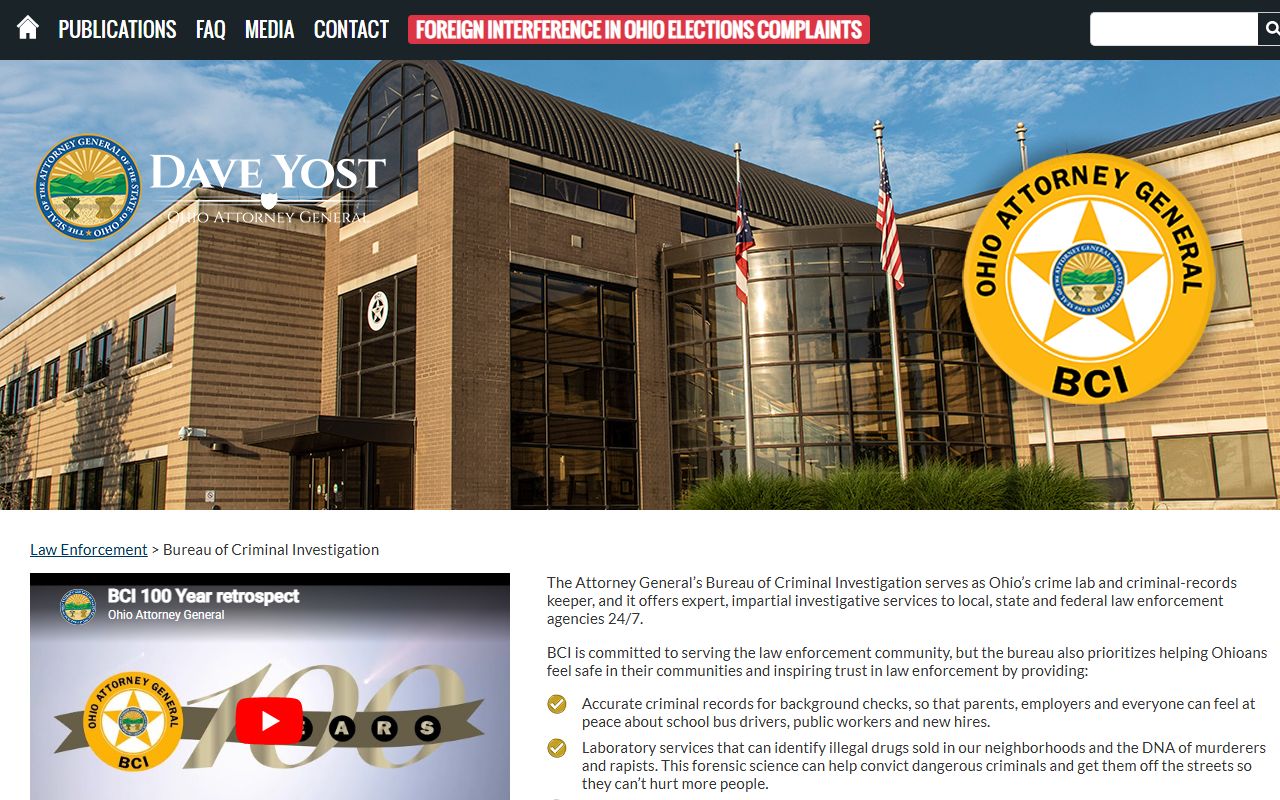
BCI also runs regional offices in Richfield, Bowling Green, and Youngstown. These serve different parts of the state so you don't have to travel to London for everything.
Under Ohio Revised Code Section 149.43, most government records in Ohio are public. But BCI criminal history files have a different rule. Computerized criminal history records at BCI are not public records under Ohio law. Only the person named in the record or someone with legal authority can get them. That means you can check your own criminal history through BCI, but you can't pull someone else's BCI record without a statute that says you can.
Court records are different. Those are public.
WebCheck Background Check System
WebCheck is the way most people get a formal Ohio criminal history check done. It uses electronic fingerprints instead of old ink cards. The system sends prints straight to BCI for comparison against the state criminal database. Results come back fast. Electronic checks can return in as little as a few hours, while old mail-in cards took weeks. You can get a BCI check for Ohio-only records or add an FBI check for a national search. The cost for a BCI check runs about $22 to $35 depending on the provider location. FBI checks add another $30 to $45 on top of that.
The WebCheck Background Check Services page explains how the system works and what you need to bring.
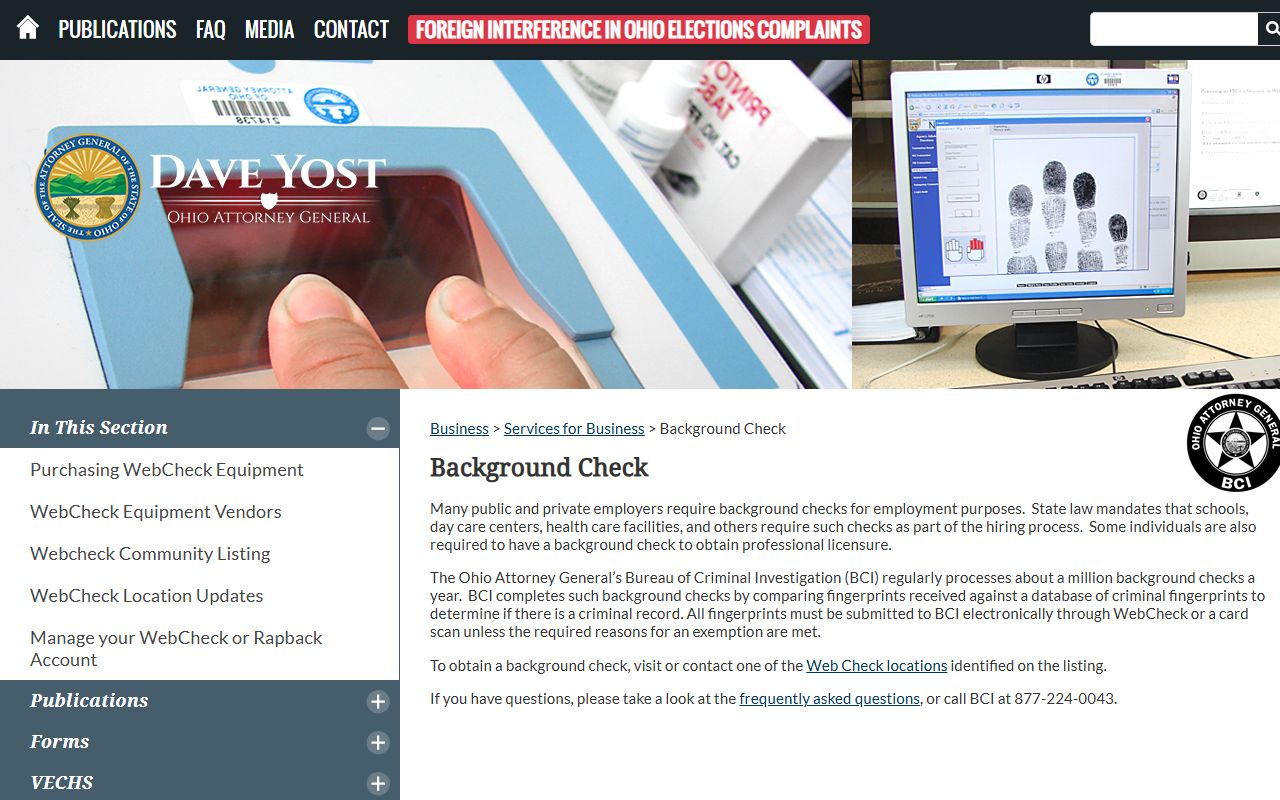
You need a valid photo ID like a driver's license or passport. The provider scans your prints with a Livescan machine. If the print quality is bad, the machine tells the operator right away so they can redo it. Results go to the agency or person who asked for the check.
WebCheck providers are spread across every county. Many sheriff's offices and police departments offer the service. Some private companies do too. To find one near you, use the WebCheck Community Locations finder on the Attorney General's site. You can search by county or zip code.
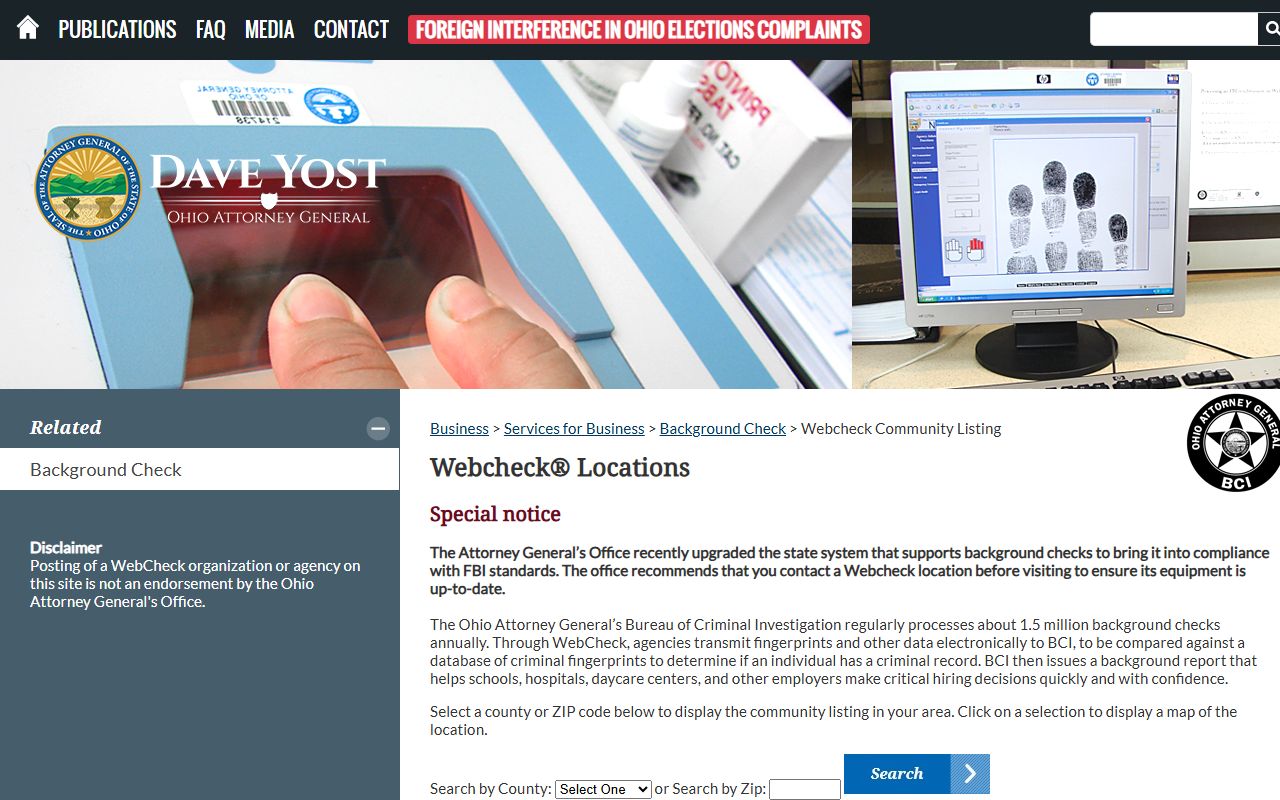
Most locations are open weekdays. Some take walk-ins. Others need an appointment. Call ahead to check.
The Ohio Governor's portal on background checks ties these resources together in one spot and lists which state agencies require criminal history checks.
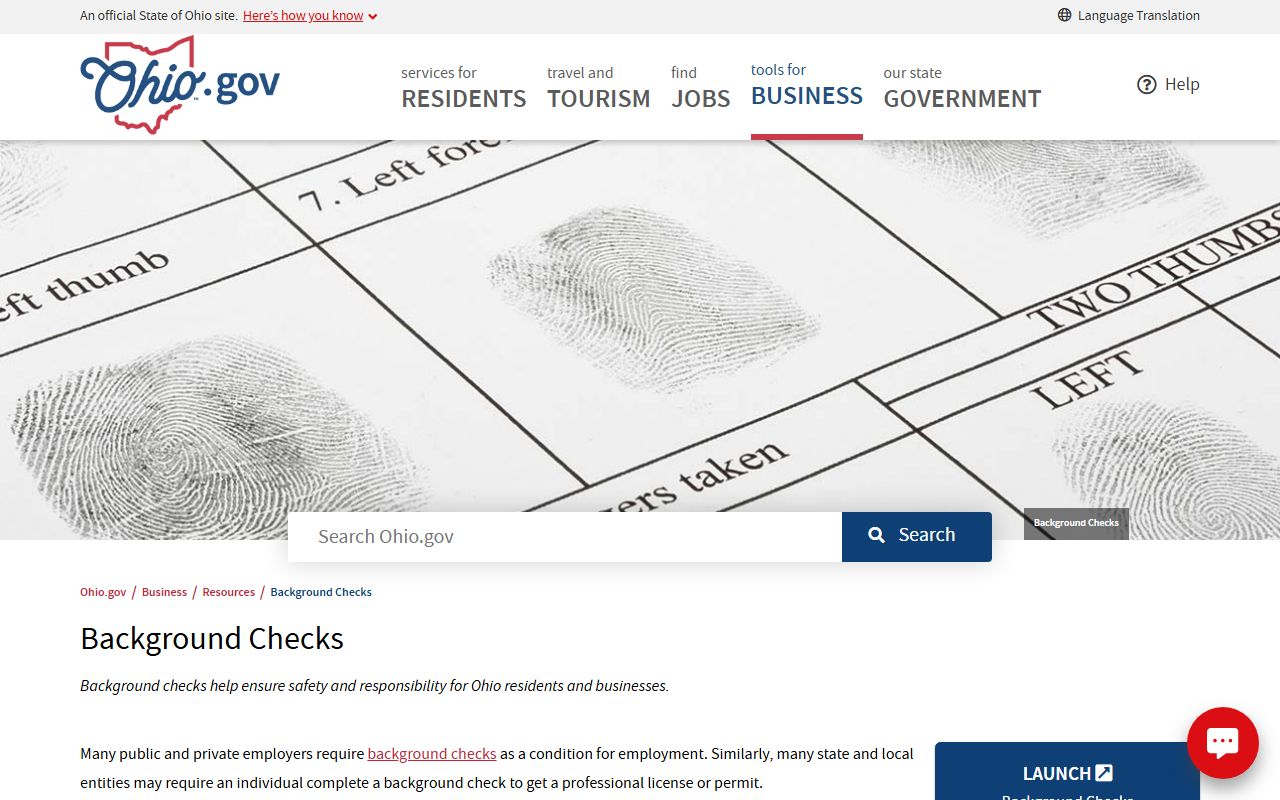
That page also has links to dispute procedures if you think your record has errors.
Ohio Offender and Inmate Search
Ohio has a free tool that lets you look up anyone serving time in a state prison or under state supervision. The ODRC Offender Search covers current inmates, people on parole, judicially released individuals, and those who died while in custody. It does not cover county jails or city lockups. For local inmates, you have to check with the county sheriff.
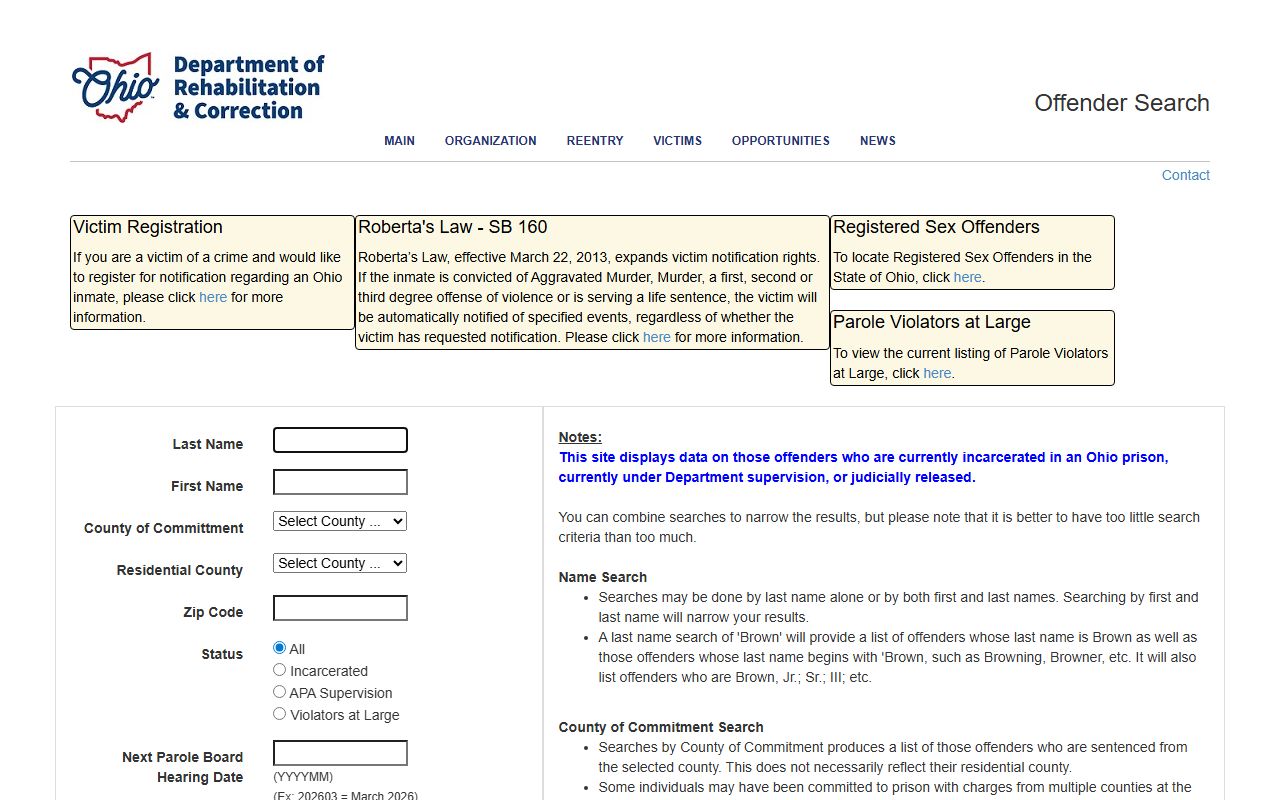
The search lets you look up people by name, offender number, county of commitment, or zip code. Results show the person's name, photo, criminal history, sentence details, and which facility holds them. Offender numbers use a six-digit format with a letter prefix. The letter W means a female inmate. Letters A and R are for males.
The Ohio Department of Rehabilitation and Correction runs 26 to 27 state prisons housing around 45,000 inmates. Their headquarters is at 4545 Fisher Road, Suite D, Columbus, OH 43228. You can reach their main office at 614-387-0588.
ODRC also works with the VINE notification system. Crime victims can sign up to get alerts when an offender's status changes, like a transfer or upcoming parole hearing.
Criminal History in Ohio Courts
Ohio has a layered court system. Each county has a Court of Common Pleas that handles felony criminal cases. Municipal courts and county courts take care of misdemeanors and traffic cases. The Clerk of Courts in each county keeps records for the Common Pleas Court, and many have online search tools now. You can look up case dockets, hearing dates, charges, and outcomes without paying a fee in most counties.
The Supreme Court of Ohio sits at the top of the court system. Its public docket has records going back to 1985 and lets you search by party name, case number, or filing date.
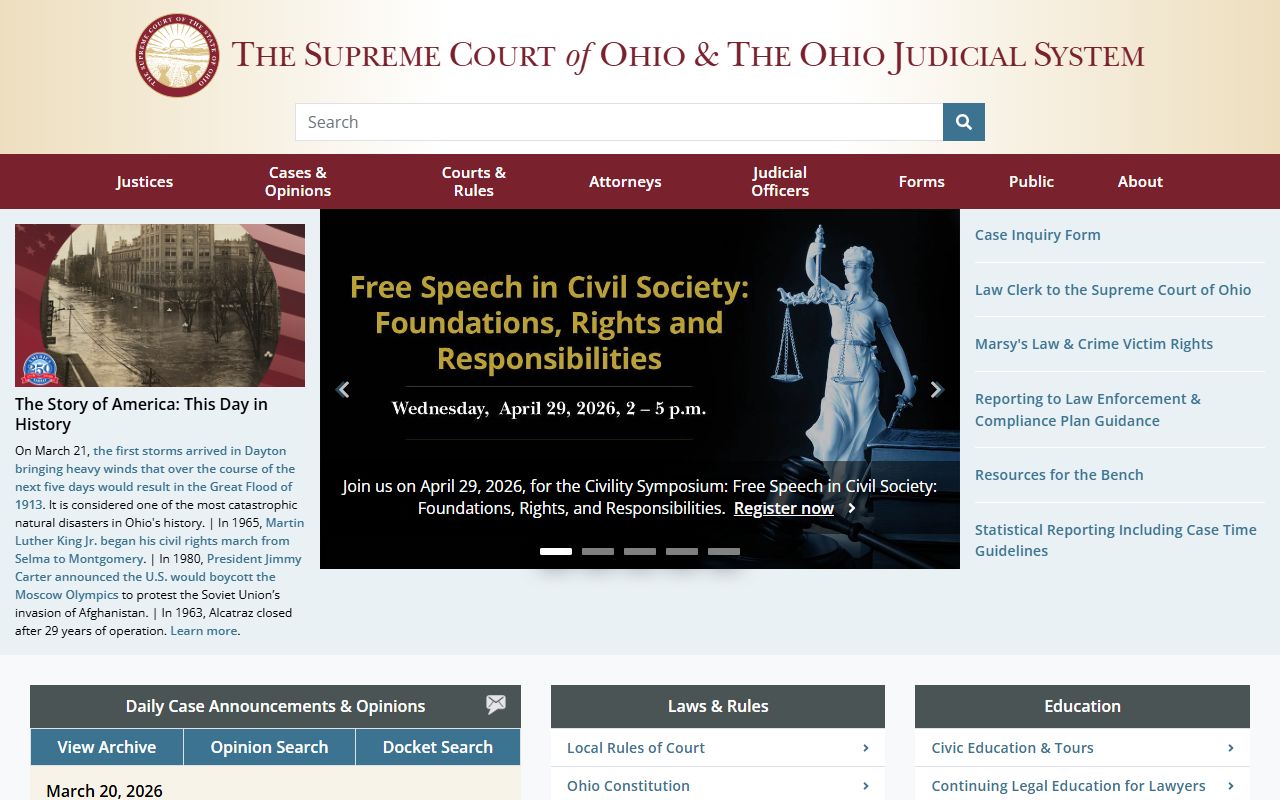
The Court also offers a case activity notification service. You can sign up for email alerts when new filings happen on a case you're tracking.
The Ohio Clerk of Courts Association has been around since 1940 and serves all 88 counties. Their site has a directory of every county clerk with contact info for record requests. If you're not sure which court handled a case, that directory is a good place to start.
County clerks keep felony records permanently. Misdemeanors stay on file for 5 to 25 years depending on the offense. DUI and OVI records are kept for 50 years. Court dockets and indexes are kept forever.
Most criminal case files are public. Anyone can ask the clerk for copies. The Ohio Public Records Act says you don't have to give your name or say why you want the records. Copies cost around 5 to 25 cents per page depending on the county. Certified copies run about $1 per page plus a certification fee.
Ohio Public Records and Criminal History Access
The Ohio Public Records Act under ORC 149.43 gives everyone the right to see government records. This law was first passed in 1963. It says that any person can ask for copies of public records or look at them without giving a reason. You don't even have to put your request in writing.
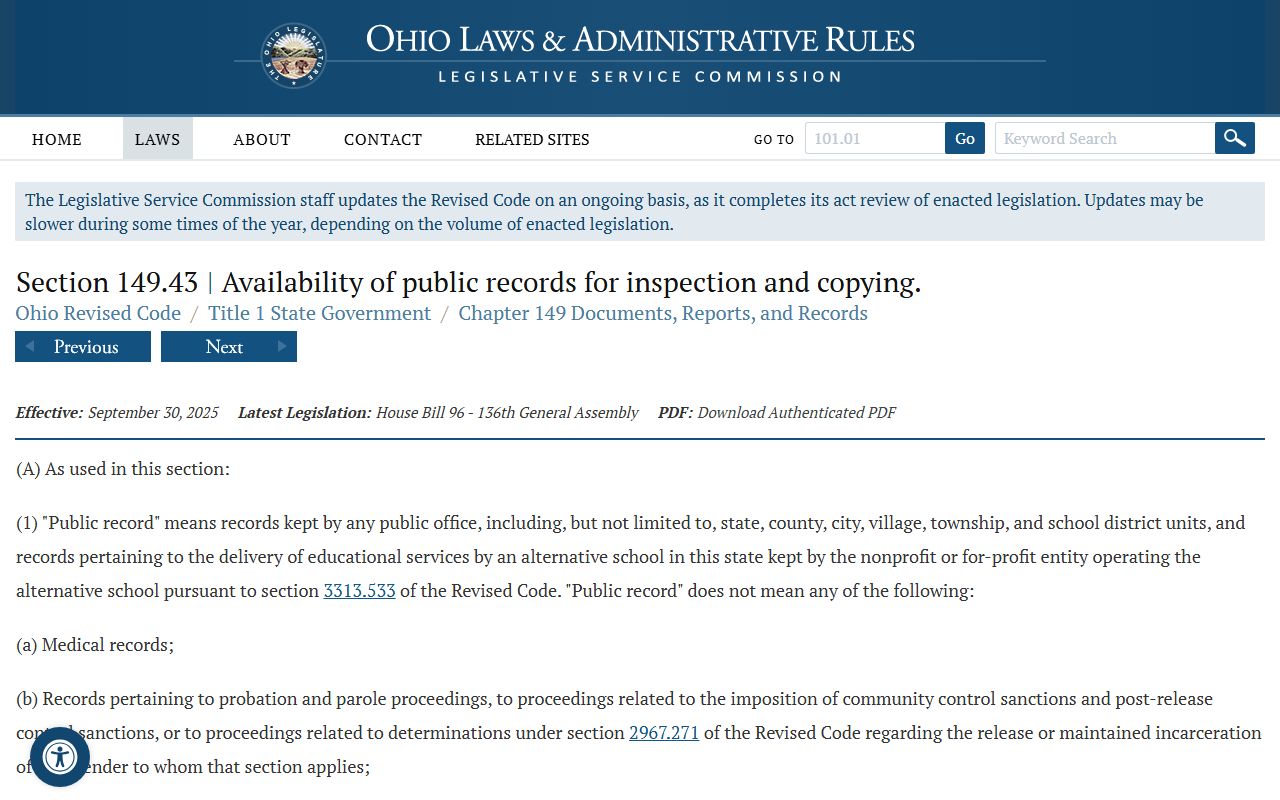
If a public office fails to hand over records, the law allows damages of $100 per business day up to $1,000. You can also recover attorney fees if you have to take the case to court through a mandamus action.
Not everything is open. The law lists exceptions. Medical records, adoption records, and certain law enforcement investigation files are off limits. Sealed and expunged criminal records are also exempt. Social security numbers and bank account numbers get blacked out before release. But basic criminal case info like charges, court dates, and outcomes is public in almost every situation.
The Ohio Attorney General Sunshine Laws page has guides and training on public records access. The "Yellow Book" manual is the go-to resource for understanding Ohio's open records and open meetings laws.

You can call the Attorney General's office at 614-466-4986 or 800-282-0515 for help with records requests or to order printed copies of the manual.
Ohio Sex Offender Criminal History Registry
Ohio runs the eSORN database for sex offender registration. It is maintained by the Attorney General's office with help from local sheriffs in all 88 counties. You can search by name, city, county, zip code, or school district. The system shows photos, addresses, and offense details for registered offenders classified as Tier I, II, or III under Ohio Revised Code Chapter 2950.
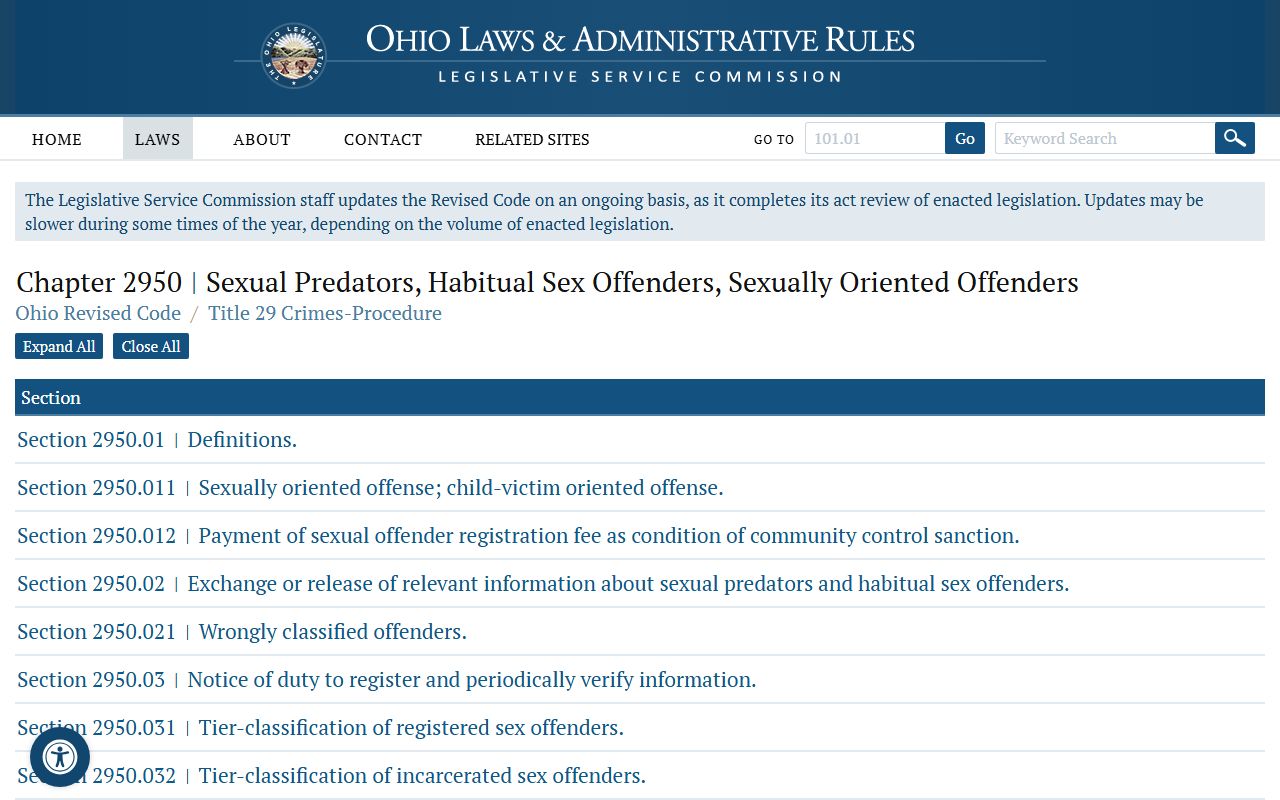
The tier system is based on the offense, not individual risk. Tier I offenders register once a year for 15 years. Tier II offenders check in every 180 days for 25 years. Tier III offenders register every 90 days for life and face mandatory community notification.
Offenders must register within 3 days of entering a county to live, work, or go to school. They have to report changes in address, phone number, and internet accounts. Living within 1,000 feet of a school is banned for offenses after July 31, 2003. The law was updated in 2008 through Senate Bill 10 to match the federal Adam Walsh Act.
You can sign up for email alerts if an offender moves near a certain address. Call 866-406-4534 for help with the eSORN system.
Ohio Criminal History Records and Expungement
Ohio law allows some criminal records to be sealed or expunged under ORC 2953.32. The process starts with getting your full criminal record from all courts and requesting a BCI background check. Then you file an application with the court that handled your case. Filing fees are typically $50 to $100 depending on the county. Some non-conviction records can be sealed at no charge.
The Ohio Attorney General's website has information about expungement resources and links to legal aid organizations that help with record sealing.

Legal Aid can be reached at 1-888-817-3777. Many county Clerk of Courts offices also have self-help resources on their websites for people who want to file without a lawyer.
Waiting periods vary. If your case was dismissed or you were found not guilty, you can file right away. If you were arrested but never indicted, you wait two years. Conviction waiting periods depend on the offense level. The court holds a hearing and the prosecutor gets notice. Not all crimes are eligible.
Note: Sheriff's offices keep arrest records for 25 years. Jail booking records stay on file for 10 years after release. These are separate from court records and follow their own retention rules.
Browse Ohio Criminal History by County
Each of Ohio's 88 counties has a Clerk of Courts that keeps criminal case records and a Sheriff's office that handles local law enforcement records. Pick a county to find contact info and local resources for criminal history searches.
Criminal History in Major Ohio Cities
City police departments keep their own records of arrests and incidents. For criminal court cases, you go to the county court system. Pick a city to find local police records contacts and the county resources that serve that area.