
Dayton Criminal History Lookup
Dayton criminal history records are held by the Dayton Police Department and the Montgomery County Clerk of Courts. As the county seat of Montgomery County in southwest Ohio, Dayton is where the main courthouse and police headquarters are located. The police department uses the NextRequest portal for public records requests. Court records for felony and misdemeanor cases are maintained by the county clerk. Criminal records in Dayton are public under Ohio law, and you can request them without providing identification or a reason. There are both online and in-person options for getting the records you need.
Dayton Overview
Dayton Police Public Records
The Dayton Police public records page directs you to the NextRequest portal. This is an online system where you submit your request, track its progress, and receive records electronically. It works from any computer or phone. You fill out the form, describe what you need, and the city processes it. The system sends you updates as your request moves through the queue.
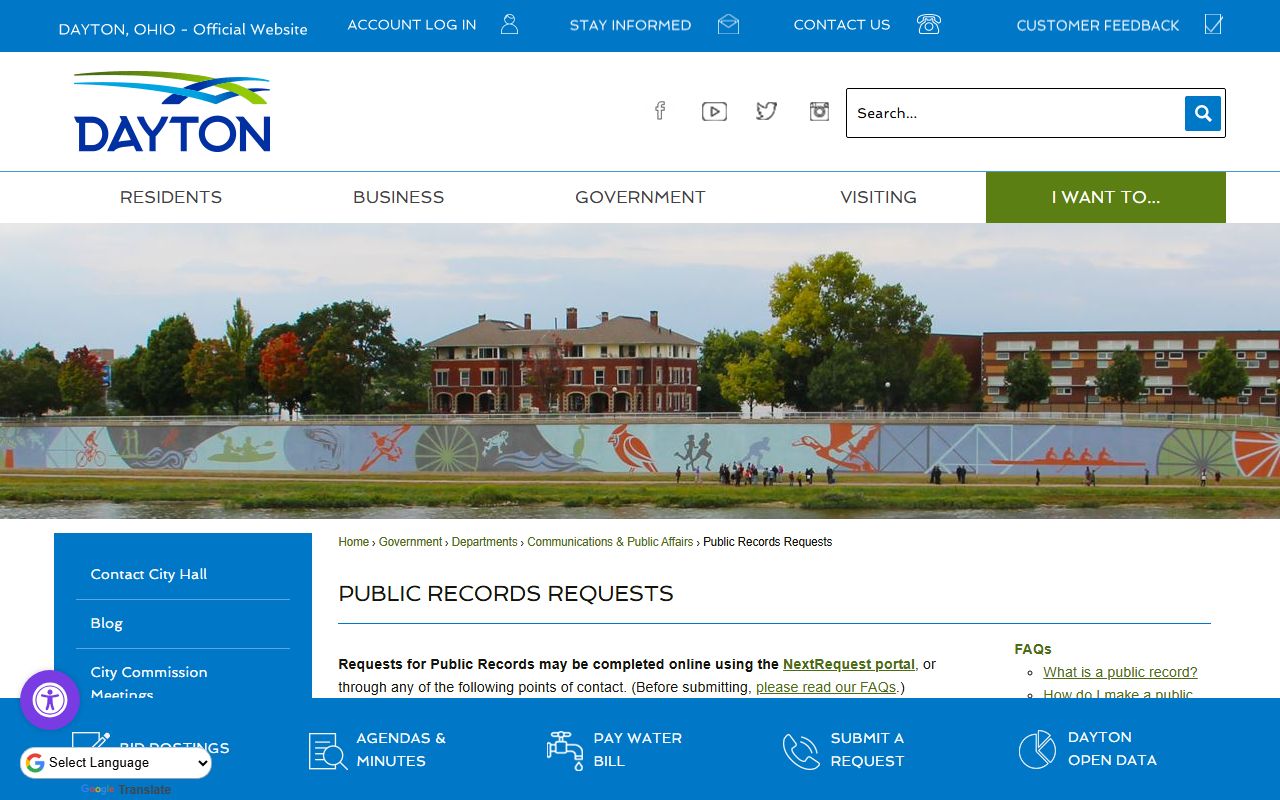
Dayton City Hall is at 101 W Third St, 2nd Floor, Dayton, OH 45402. You can also fax requests to 937-333-4269. The Records Bureau is open Monday through Friday from 8:00 AM to 4:30 PM. In-person visits are fine, but the online portal is faster for most people. One thing to know about Dayton is the 10 record request limit. Each person can request up to 10 records per month. If you need more, you may have to spread your requests across multiple months or explain the situation to the records office.
Mail requests require prepayment. If you are not local and want records sent to you, call the Records Bureau first to find out the cost and how to pay. Under ORC 149.43, the city must provide records in a reasonable time. The monthly limit on requests is unusual but not a violation of the law as long as they still provide records within the legal framework.
Montgomery County Criminal Court Records
Felony criminal cases in Dayton are filed in the Montgomery County Common Pleas Court. The Clerk of Courts keeps all case files for felony charges, including the docket, motions, hearing dates, plea entries, and sentencing records. The Montgomery County courthouse is in downtown Dayton. You can search for cases online through the clerk's website. The online system lets you look up cases by name or case number.
Misdemeanor cases go through the Dayton Municipal Court. This court handles lesser criminal offenses, traffic violations, and some preliminary felony hearings. The municipal court has its own online search tool. Between the two courts, you can find most criminal case records from Dayton. If you do not know whether a case was a felony or misdemeanor, start with the county system and then check the municipal court.
Certified copies of court documents are available from the clerk's office for a fee. Standard copies are cheaper but do not carry the court's official seal. For most personal searches, the free online case index gives you enough data to see what charges were filed and how the case ended.
Criminal Background Checks in Dayton
Fingerprint-based background checks in Dayton go through the WebCheck system. The WebCheck community listing shows locations in the Dayton and Montgomery County area. A BCI check covers Ohio criminal history records. An FBI check covers national records. Fees vary by location but generally run $25 to $40 for each check. Some locations offer a combined rate.
The ODRC Offender Search is free and lets you look up anyone currently in an Ohio state prison. You can search by name or by county. The tool shows conviction details, sentence length, and where the person is housed. It only covers state prison inmates, not people in the Montgomery County Jail or on local supervision.
Ohio's sex offender registry is also a public resource. Under ORC Chapter 2950, you can search the eSORN database for registered offenders in the Dayton area. The system shows photos, home addresses, offenses, and classification levels. The Montgomery County Sheriff handles local compliance checks for offenders in Dayton.
Dayton Criminal History Access Rights
Under Ohio law, you have the right to get copies of criminal records from any public office in Dayton. ORC 149.43 is the main statute that governs public records access. You do not have to say who you are. You do not have to explain your reason. The law puts the burden on the government office to justify any denial.
If the Dayton Police or Montgomery County courts refuse to give you records, you can contact the Ohio Attorney General's Sunshine Laws division. They have a mediation program for public records disputes. Most requests are handled without problems, but having this option is good to know about.
Expungement is available for some criminal records in Dayton. ORC 2953.32 lets eligible people apply to seal certain convictions through the Montgomery County Common Pleas Court. The filing fee is $50. The court considers the offense type, how much time has passed, and whether the person has stayed out of trouble. Sealed records are taken off public search tools but remain accessible to law enforcement in limited situations.
Note: Dayton's 10 records per month limit applies per person, not per request, so plan ahead if you need multiple reports.
How to Get Dayton Criminal Case Data
For police records, the NextRequest portal is the primary method. Go to the Dayton public records page and submit your request through the online form. You can track the status and get records delivered electronically. For in-person requests, visit City Hall at 101 W Third St, 2nd floor, during business hours. The Records Bureau is open 8 AM to 4:30 PM on weekdays.
For court case data, use the Montgomery County Clerk online search for felonies or the Dayton Municipal Court search for misdemeanors. Both are free. If you need a comprehensive criminal history check that covers all of Ohio, the WebCheck system is the way to go. Find a fingerprinting location near Dayton through the Attorney General's community listing and get a BCI check, an FBI check, or both.
Nearby Cities
These nearby cities have their own criminal history resources. Check their pages for local contact info and search tools.